

WWOOFing in Europe: A Gap Year Travel Experience

Updated: Jun 14
When we tell people that our son, Cormac, spent part of his gap year WWOOFing in Europe, the reaction is usually one of two things: either an enthusiastic nod of recognition or a puzzled look followed by, “What did you say?”
WWOOF stands for Worldwide Opportunities on Organic Farms, a global network that connects travelers with organic farms and small agricultural operations. In exchange for helping with daily farm activities, WWOOFers receive room and board, creating an affordable and immersive way to experience a new country and culture.
WWOOF for a Gap Year
When we began exploring options for Cormac’s gap year, our daughter Mazzy suggested looking into the WWOOF program. As we mentioned the idea to friends and colleagues, we were surprised by how many people had either participated themselves or knew someone who had. Almost everyone had positive things to say about the program, describing it as a meaningful way to travel, learn new skills, and connect with local people.
One appealing aspect of WWOOF is that it isn't limited to young travelers. While many participants are students or recent graduates taking gap years, the program welcomes people of all ages. In fact, Kevin and I have often talked about spending a few months WWOOFing ourselves someday. Some farms even welcome families, though accommodations and opportunities vary widely, and many hosts are not equipped for young children.

How the WWOOF Program Works
The WWOOF program operates independently within each country. Travelers typically pay a modest membership fee that provides access to that country's network of farms and host listings. From there, it's a matter of researching farms, reading reviews, and finding opportunities that align with your interests, schedule, and travel plans.
No two WWOOF experiences are exactly alike. Accommodations can range from tents, yurts, and campers to private bedrooms or small apartments. Some hosts provide shared accommodations with other WWOOFers, making it important to ask questions beforehand so you know what to expect.
The work itself varies just as much. Depending on the season and the farm, tasks might include planting, harvesting, caring for animals, building projects, cooking, gardening, or helping with eco-tourism activities. Most hosts expect about 20–30 hours of work per week, typically spread across five days, leaving time to explore the surrounding area and experience local culture. Keep in mind, these are FARMS, which typically mean RURAL. Getting around to sightsee might require biking to a bus to get to a train, or hitching a ride.

Cormac’s WWOOF Experience
For Cormac, the appeal of WWOOFing wasn't simply free lodging. It was the opportunity to live differently for a while—to be more than just a tourist seeing the sights, but to learn about how people live and farm.
Cormac had his sights set on Greece and the Netherlands. Because he planned to begin his WWOOF experience in January, he wisely chose to travel from south to north. Even so, finding hosts during the winter months proved more challenging than expected. Many farms had little need for seasonal help, and some never responded to inquiries.
Eventually, he secured a placement in central Greece, in the little village of Petroto, Thessaly.

Cormac's Experience and Reflections from Farm 1- Thessaly Greece
Arriving at the bus station where the hosts would pick me up, I truly did not know what to expect, knowing only what was posted online and told to me by the hosts. What I found was a lovely and inviting couple with an open home and a fascinating permaculture plot in the works. I spent two weeks there, working with bamboo sprouts, digging trenches, mixing concrete for foundations, and more. On days off, I was pleasantly surprised to find wonderful hikes, ruins, and history, even in this very rural area off the beaten path of tourism in Greece. Meeting other WWOOFers was great for exploring together, and being able to live in the home of the hosts and share meals, knowledge, and stories was fantastic.

Sightseeing and Reconnecting with AuPair Between WWOOF Gigs
Outside of the WWOOF farm, Cormac stayed in hostels and did sightseeing—in Athens, and Thessaloniki in Greece, and Amsterdam, Utrecht, and The Hague in the Netherlands.. After a month in Greece (split between sightseeing and WWOOF), he flew to the Netherlands for his second WWOOF experience.
The farm was located near the German border, with Düsseldorf serving as the nearest airport. This unexpected routing created one of the most meaningful moments of the trip. It allowed Cormac to reconnect with Kerstin, a German who served as our au pair for nearly two years. She had lived with our family and cared for Cormac from the time he was six months old until he was two years old, along with wrangling the other two kids when Kevin and I were working.
Kerstin was thrilled to spend a few days with Cormac and see the independent young man he was growing into. And, if we're being honest, Cormac was equally thrilled to have someone looking after him for a few days after navigating Europe on his own.

Cormac's Experience & Reflections from Farm 2 and 3 - The Netherlands
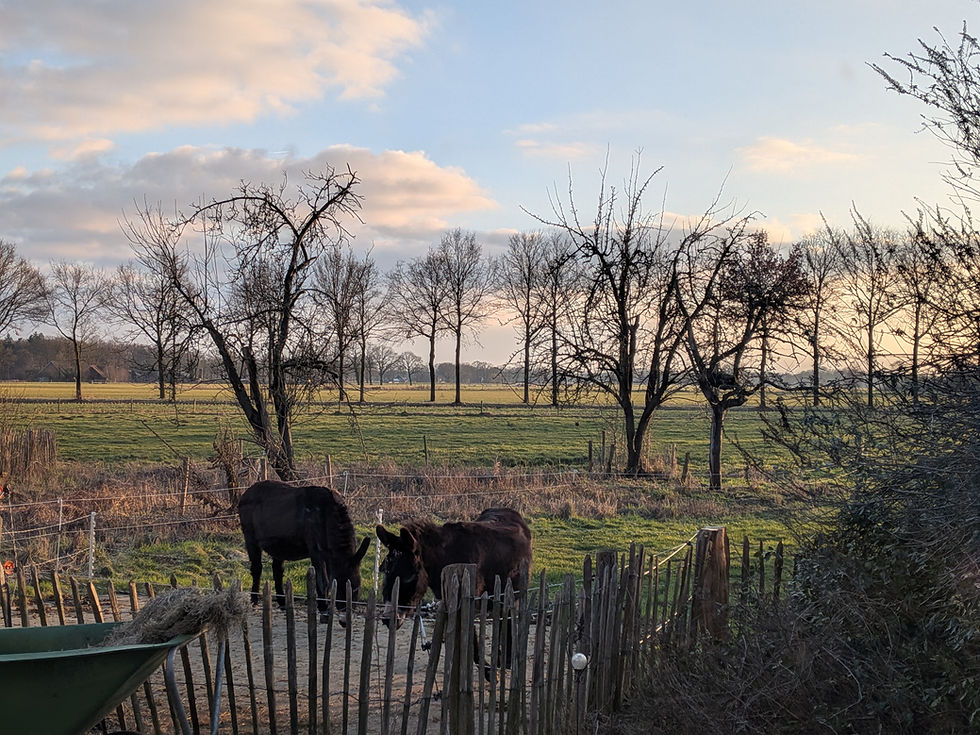
From my two farms in The Netherlands, I had quite different experiences. The first Dutch farm I was only at for a week, which worked out well considering the accommodation was a 1-person shed away from the house, which got quite cold at night. It was more of a hobby farm, raising different animals solely for the enjoyment of having them, and the work was not so varied. Still, it was great to have the experience of living with this family in this beautiful and rural part of the Dutch countryside near the German border.
The second Dutch farm here was notably bigger, with many more projects to work on over the month I stayed there. Being there at the start of the season, it was incredibly fun to start projects and see them through, including the planting of several hundred raspberries, blueberries, trees, and hedge plants. On top of taking care of the ducks, chickens, and sheep every morning, it felt like a much more realistic experience of being a farmer, even though we were only expected to work 6-7 hours a day. A nice apartment-like space with two separate rooms and a ¾ bathroom was a great place to come back to after a day working or out exploring, which was easy to do with a bicycle and the good public transit system. The hosts were lovely, accommodating, inviting, and good at cooking as one could hope for. It was a great way to end the WWOOFing experience.
The two best farms I stayed at (Greece and the second one in the Netherlands), both had me do video meetings before accepting me, which I think is a good indicator that they care about who they host, will treat you well, and you won't be uncomfortable with any fellow WWOOFers you might work with. Anyone looking to become a WWOOFer should definitely take the time to read everything about the farms, reviews, and look for caring hosts who appreciate WWOOFers, and themselves be truly willing to put in hard work, get dirty, and immerse themselves for more than a week or two if you can.

A Mom's Perspective
I'll admit it—I was nervous.
Although Cormac had traveled extensively with our family, his previous trips had largely meant following our lead. For his fall Gap Year experience, he travelled with a group of 13 peers and 2 counselors to South America through Pacific Discovery--- an adventure for sure, but fully guided and planned out. In both cases, logistics were handled, routes were planned, accommodations were booked, and the inevitable problems that arise while traveling were solved by others.
This time was different.
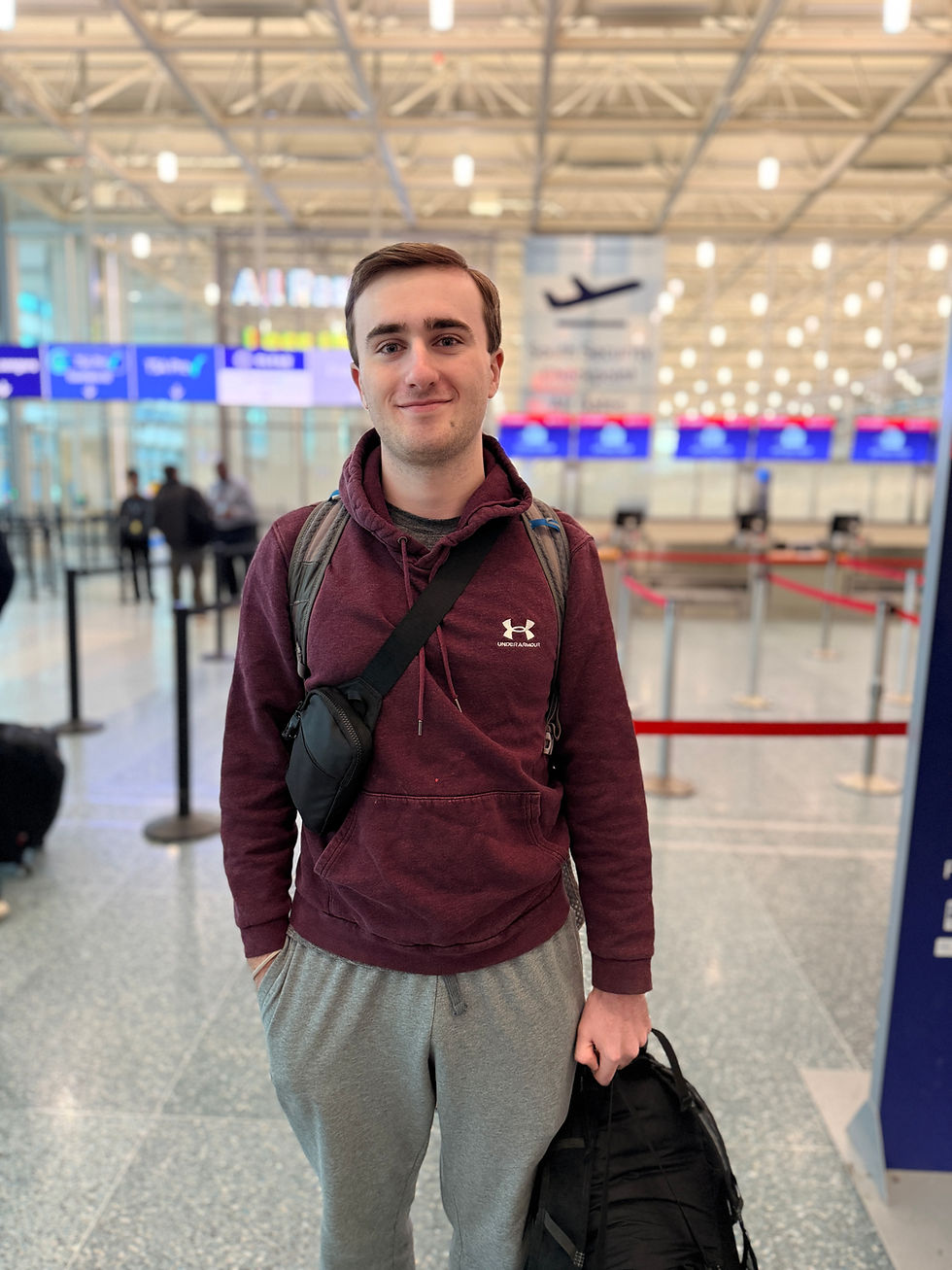
He boarded a plane to Athens by himself and was responsible for everything that followed. He had to navigate unfamiliar airports, train stations, and bus systems. He had to overcome language barriers, adapt to new living situations, meet new people, and learn how to be comfortable being uncomfortable.
He explored places we had never seen. He experienced cultures from the inside rather than from a hotel room. He learned how to solve problems independently and gained confidence in his ability to navigate the world.
Gap years are often viewed as a pause between stages of life, but for Cormac, WWOOFing became something much more valuable. It challenged him, broadened his perspective, and helped him develop a level of independence that simply can't be taught in a classroom.
As parents, that's exactly what we had hoped for.
We came away convinced that WWOOFing is one of the most creative, affordable, and meaningful ways to experience another country—not just for gap-year students, but for travelers of any age. As Kevin and I transition from careers to retirement and begin spending more time exploring the world, we can easily imagine ourselves on an organic farm somewhere, trading a few hours of work for the chance to learn, connect, and experience a place from the inside out.


This post about WWOOFing as a gap year experience is really inspiring. It is great to see how travel and volunteering can combine for a meaningful adventure. I remember working on a travel project where I had to research similar programs and wanted to make sure my writing was clear. I reached out for academic assignment help UK to help me structure my work. Good travel experiences and good support help you broaden your horizons. It showed me how self care matters. It helped me understand large projects better. Nice post . Your post make me smile.
Reading about WWOOFing in Europe reminded me that travelling can teach us valuable lessons about different cultures, teamwork, and simple living. As a PhD student, I enjoy discovering new perspectives, and I also work part-time at the affordable assignment. During college, I struggled academically, which inspired me to help others facing similar challenges. Those experiences taught me patience and resilience. I believe learning happens everywhere, whether through travel experiences or working through complex subjects like strategic management with LSPM strategic management assignment help.
So refreshing to see someone say it straight. Great post!😀
This post gave a clear picture of how WWOOFing can help people learn through real experiences instead of just sightseeing. I remember trying online Nursing exam help during a busy semester while looking into travel ideas, and it helped me stay organized. Reading stories like this shows that stepping outside your comfort zone can teach lessons that stay with you for a long time.
The post on WWOOFing gives a really interesting look at how a gap year can turn into a hands-on learning experience through farm work and cultural exchange. I remember reading similar stories while managing a packed study schedule and feeling inspired but also a bit overwhelmed. I looked on university assignment services help through online sources during that time to keep up with deadlines while exploring ideas like this. It shows how real-world experiences and study balance can shape personal growth. Nice post, its makes me smile